The 7th Wind Power Support Structure Symposium Held in Chongqing
From May 16 to 17, 2025, the 7th Wind Power Support Structure Symposium(hereinafter referred to as the Seminar) was successfully held in Chongqing. Hosted by the National Wind Power Engineering Technology Research Center and the Offshore Wind Power Branch of China Association of Ocean Engineering Consultants, and organized by Chongqing University, the event attracted over 200 authoritative experts and scholars from the domestic and international wind power industry as well as representatives of leading industrial chain enterprises to gather in the mountain city, discussing the cutting-edge technologies and development trends in the field of wind power support structures.

At the critical stage of the current new energy transition, the wind power industry has entered an important period of rapid development and technological innovation. The Symposium was comprehensively upgraded, breaking away from the previous model of focusing solely on offshore wind power, and expanding the topics to cover the full dimensions of wind power support structures across both onshore and offshore areas. Aligned with the national energy strategic layout, it aimed to effectively address the practical challenges in wind power projects.
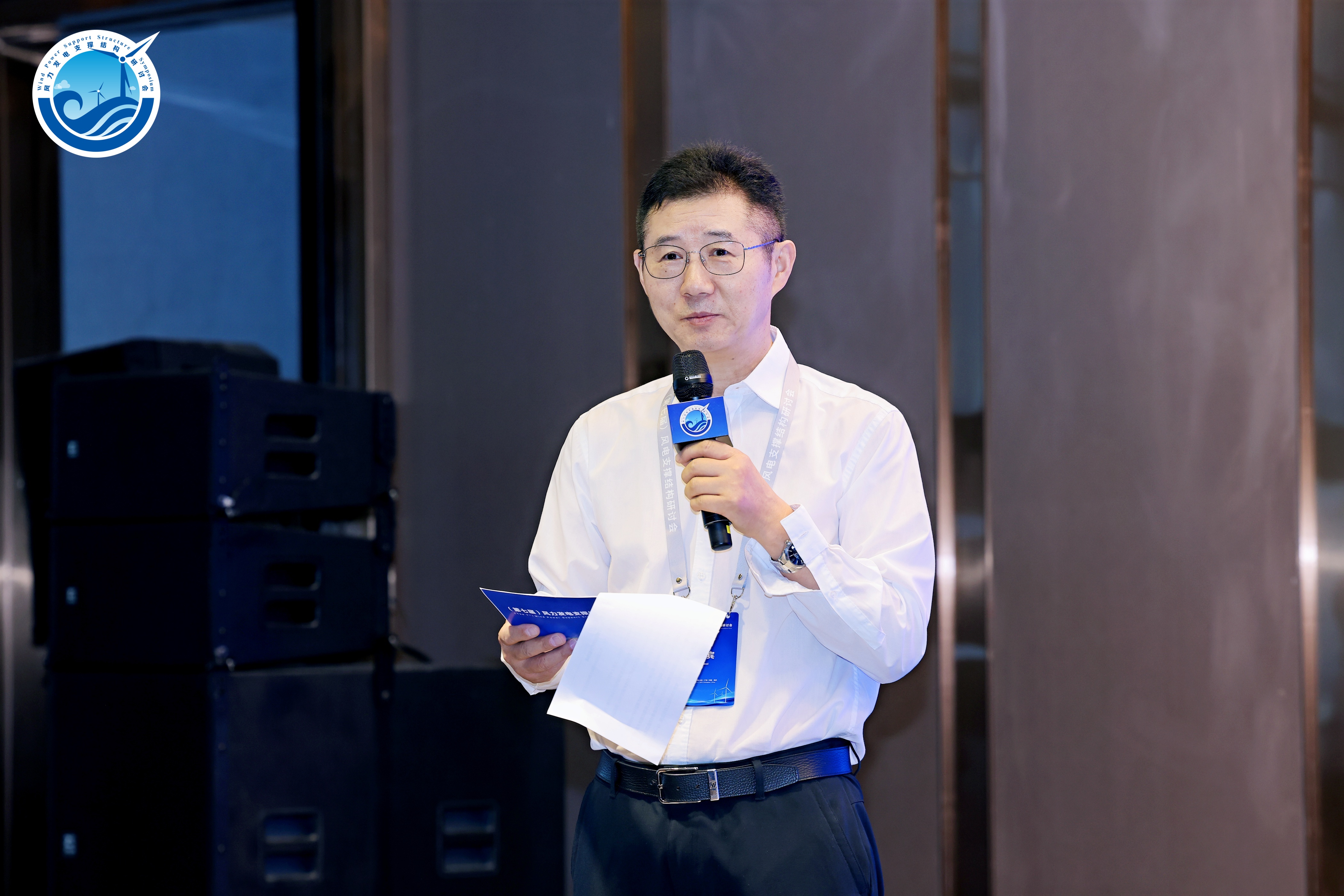
The Symposium on May 17 featured numerous highlights. At the opening, Zhai Endi, Secretary-General of the Offshore Wind Power Branch of China Association of Ocean Engineering Consultants and Director of the National Wind Power Engineering Technology Research Center, extended a warm welcome to all participating guests. He stated that the Symposium had gathered authoritative experts, scholars and enterprise representatives in the wind power sector from home and abroad, expressing the expectation that through this event, participants would open up their minds, conduct in-depth discussions on the opportunities and challenges of wind power support structures, and jointly explore effective solutions to existing problems. Cai Shaokuan, Chairman of the Offshore Wind Power Branch of China Association of Ocean Engineering Consultants; Zhu Caichao, Assistant to the President of Chongqing University; and Ren Jun, Secretary-General of the National Technical Committee for Wind Power Standardization, attended the Symposium and delivered speeches.
In his speech, Cai Shaokuan pointed out that the wind power industry has entered a critical period of technological innovation and industrial upgrading. He emphasized that against the backdrop of the shift in electricity price policies towards market-oriented pricing, breakthroughs in support structure technologies will become the core driving force for cost reduction and efficiency improvement. Zhu Caichao indicated that it is necessary to build a trinity innovation model of "technology highland - industry-university-research ecosystem - talent system" to support the achievement of the "dual carbon" goals. Ren Jun revealed that China is accelerating the construction of an independent and controllable wind power standard system, promoting the alignment of Chinese standards with international ones.
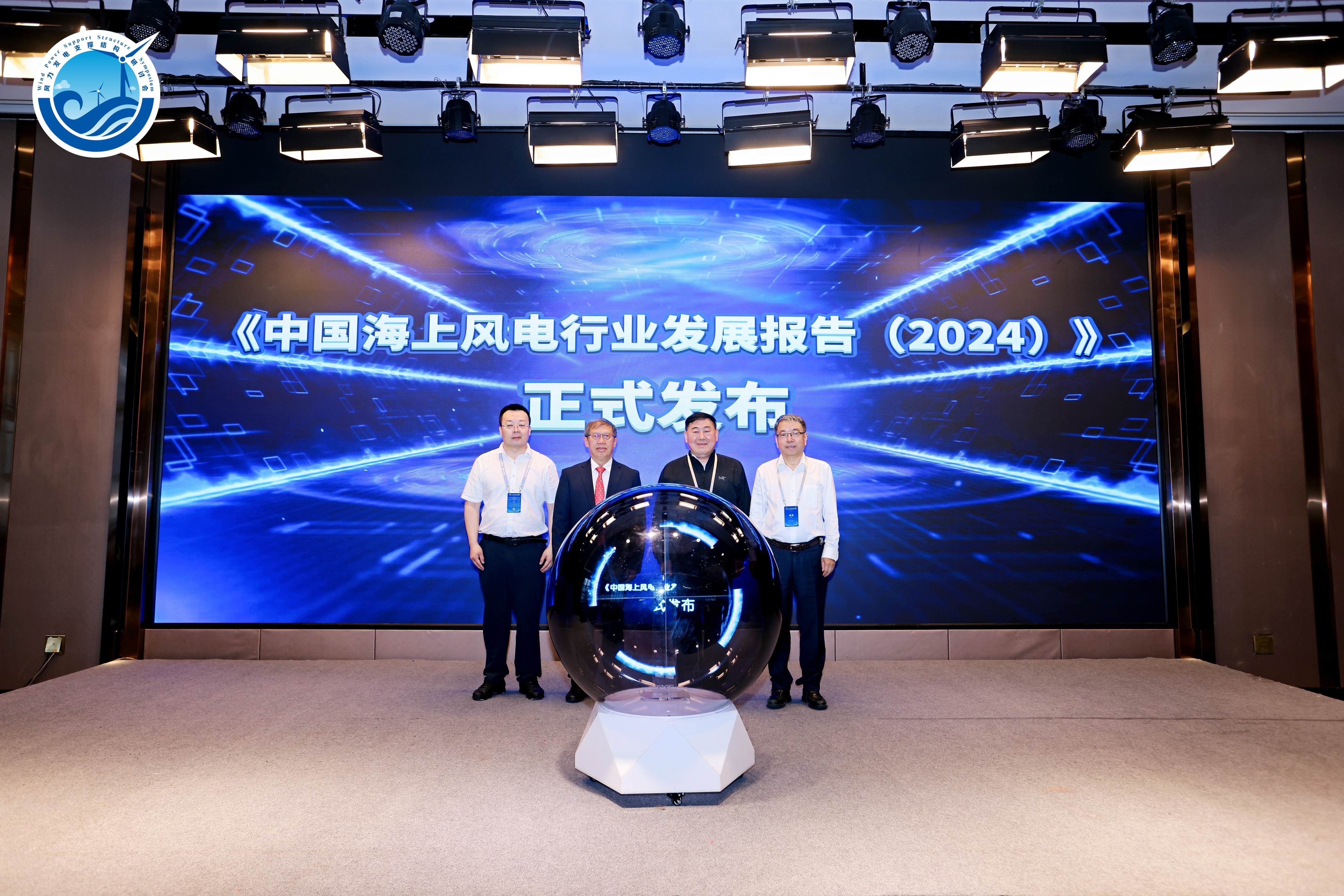
During the Seminar, two important outcomes were released with great fanfare: the China Offshore Wind Power Industry Development Report (2024) and the Chongqing University Prestressed Concrete-Filled Steel Tubular Lattice Wind Turbine Tower Design Software. The unveiling ceremony was jointly conducted by distinguished experts including Zhou Xuhong, Academician of the Chinese Academy of Engineering; Cai Shaokuan, Chairman of the Offshore Wind Power Branch of China Association of Ocean Engineering Consultants; Qi Hesheng, Vice Chairman of the Chinese Renewable Energy Society; Ren Jun, Secretary-General of the National Technical Committee for Wind Power Standardization; and Zhu Caichao, Assistant to the President of Chongqing University.
The morning keynote speech session was hosted by Wang Yuhang, Vice Dean of the College of Civil Engineering of Chongqing University and Secretary-General of the Wind Power Structure Branch of the China Steel Structure Association. Academician Zhou Xuhong delivered a speech themed on Wind Turbine Tower Structure Accidents and Reflections, analyzing the main causes of wind power accidents—including extreme weather, design flaws and operation & maintenance errors—with detailed cases. He called on the industry to strengthen basic research, enhance technical management capabilities, and put forward the structural safety design concept of "tilting but not collapsing", which resonated widely among the audience. Professor Tim Stallard from the University of Manchester shared his research on hot spot stress prediction of lightweight jacket structures, proposing to optimize joint design through multi-scale experiments and simulations, thus providing new ideas for cost reduction in deep and far-reaching sea wind power projects. Zhai Endi, Director of the National Wind Power Engineering Technology Research Center, directly pointed out the top ten pain points in jacket foundations for deep and far-reaching sea wind power, including deep-water pile-soil interaction, transportation and installation of ultra-large structures, and full-life-cycle anti-corrosion, calling for collaborative research efforts across the industrial chain.

The roundtable forum was hosted by Lu Zhongmin, Deputy Secretary-General of the Offshore Wind Power Branch of China Association of Ocean Engineering Consultants. A number of industry experts from fields such as energy development, design and R&D, and equipment manufacturing, including Zhao Min, Deputy Director of the Engineering Management Department of China Huaneng Group Co., Ltd.; Huang Weimin, Deputy General Manager of CSSC Technology Co., Ltd. and Executive Deputy General Manager of CSSC Haizhuang Windpower Co., Ltd.; Zhou Quanzhi, Chief Technology Expert of Longyuan (Beijing) New Energy Engineering Design & Research Institute Co., Ltd.; Zhang Dongliang, General Manager of Zhejiang Huadong New Energy Technology Co., Ltd. of PowerChina Huadong Engineering Corporation Limited; and He Xiaobing, Chief Engineer of the Central Research Institute of Mingyang Smart Energy Group Co., Ltd., conducted in-depth discussions on the policy impact of the "Document No.136" issued by the National Development and Reform Commission, technological breakthroughs in deep and far-reaching sea wind power, and the global layout of the industry, offering valuable suggestions for the high-quality development of the wind power industry.

On the afternoon of May 17, two professional technical forums—the Offshore Wind Power Support Structure Forum and the New-type Support Structures Forum (e.g., Hybrid Towers)—were held simultaneously. Sixteen experts and scholars from industrial chain enterprises engaged in R&D and design, complete machine manufacturing, universities, testing and certification conducted in-depth discussions on technological innovation in wind power support structures. The offshore wind power sub-forum focused on floating anchoring systems, integration with marine pastures, load optimization in complex environments, and deep-sea construction technologies, exploring technological breakthroughs and multi-scenario applications in deep-sea wind power development. The hybrid tower and new-type structure sub-forum centered on topics such as hybrid tower design, fatigue specifications for high-strength concrete, and prefabricated torsional bearing capacity, promoting the standardization and intelligent upgrading of onshore high tower technologies. Through industry-university-research collaborative innovation, the two forums provided key technical support for the expansion of the wind power industry into deep and far-reaching sea areas and cost reduction & efficiency improvement across both onshore and offshore domains.
To enhance the depth of discussions and the breadth of practical exchanges, the Symposium also set up a variety of interactive sessions, including on-site interactions, enterprise exhibitions and laboratory visits, providing one-on-one communication opportunities for enterprises and experts, and promoting the in-depth integration of industry, university and research.
The successful holding of this Symposium has injected strong impetus into the high-quality development of the wind power industry, providing technical reserves and innovative ideas for the successful conclusion of the "14th Five-Year Plan" and the forward-looking layout of the "15th Five-Year Plan". The intellectual achievements gathered from the Symposium will be rapidly implemented in fields such as deep and far-reaching sea wind power development, intelligent structural design and multi-scenario integrated applications, driving breakthroughs in China's wind power support technologies towards lightweight, high-reliability and low-cost directions, and further consolidating China's leading edge in the global new energy sector. In the future, with the deepening of industry-university-research-application collaborative innovation, China's wind power industry will contribute Chinese strength to global energy transition and the achievement of "dual carbon" goals with a more solid technical foundation and a more open international perspective.